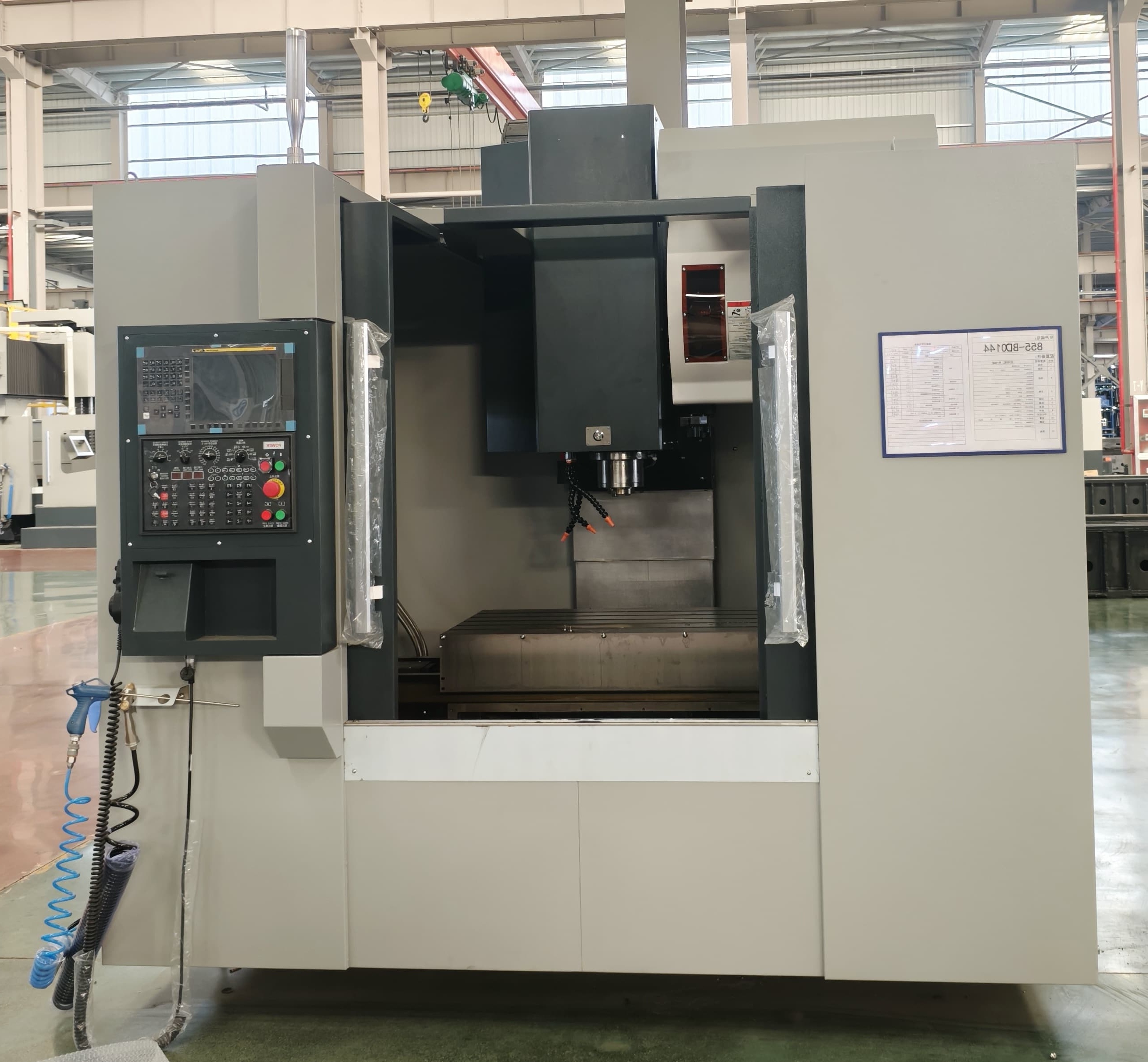
When planning a CNC milling project, cost accounting is often the first challenge that customers face. How much does CNC machining cost? What is the hourly charge standard for milling? Such questions run through the entire project cycle, and the fluctuations in milling costs are linked to multiple factors such as design, materials, and order volume, making budget planning full of uncertainties.
As a brand dedicated to high-end machine tools, GLAB is well aware of the significance of "cost transparency" and "efficient cost reduction" to enterprises. We not only provide global customers with high-precision and high-stability CNC milling machines, but also are committed to helping customers clarify the cost structure and master cost reduction techniques through professional industry experience. Under the premise of not compromising on quality, we aim to optimize the project budget. This article will break down the core factors that affect the cost of CNC milling, share practical cost reduction methods, and reveal how GLAB machines can help you control costs in the long term from the equipment end.
i. Factors Affecting the Cost of CNC Milling
The cost of CNC milling is not a fixed figure. Its pricing logic revolves around "actual input", and its core components include four major modules: equipment setup cost, labor operation cost, material cost, and machine tool usage cost. In addition to the core, component design, material properties, accuracy and complexity of tolerance requirements, order batch, the types of machine tools these factors will directly lead to the cost fluctuation, is the focus of the project planning considerations.
ii. Practical Tips for Reducing CNC Milling Costs
The core of cost reduction lies in "reducing ineffective input" rather than sacrificing quality. Based on years of experience in machine tool manufacturing and industry practice, GLAB has summarized the following directly applicable techniques:
1.Simplify part design and adapt to conventional processing
During the design stage, redundant structures and complex details should be avoided, and solutions that do not require 5-axis machine tools should be given priority - unless complex surfaces are essential for the core functions of the product.
2. Select materials that are economically suitable
Under the premise of meeting the product usage requirements, materials such as aluminum and engineering plastics that are easy to process and have high cost performance should be given priority. This type of material features low tool wear and high processing efficiency, which can simultaneously reduce both material procurement costs and processing loss costs. GLAB machine tools have optimized processing parameters for commonly used materials such as aluminum and plastic, featuring faster feed rates and longer tool life, further amplifying the cost reduction advantages of economical materials.
3.Reasonably increase the order quantity to share the fixed costs
According to the principle of "scale effect", the larger the order volume, the lower the unit cost - fixed costs such as setup fees and programming fees can be allocated to more parts. GLAB's CNC milling machines have a stable capacity for large-scale production. Their core components are designed with high-rigidity structures, ensuring high precision and consistency even during long-term processing. This avoids an increase in scrap rates during mass production and truly implements "batch cost reduction".
4.Avoid excessive pursuit of precision and set reasonable tolerances
For parts that do not require ultra-high precision, the industry standard tolerance range should be adopted. For each increase in precision grade, the processing time may rise by more than 30%, and special equipment and tools also need to be invested.
5.Adopt standard dimensions and tolerances to reduce customization costs
Give priority to using standard-sized cutting tools, fixtures and tolerance ranges, and avoid customizing special tools. Standard accessories have strong versatility, low procurement costs, and short supply cycles, which can avoid project delays caused by the waiting of special tools and indirectly reduce time costs
iii. GLAB not only a machine tool supplier, but also your cost optimization partner
GLAB has been deeply engaged in the field of machine tool manufacturing for many years, always taking "maximizing customer value" as its core. It not only offers a full range of 3-axis, 4-axis and 5-axis CNC milling machines, but also provides full-process support from "equipment selection" to "process optimization".
Whether you are a start-up that requires small-batch precision parts processing or a manufacturing giant pursuing large-scale and efficient production, GLAB can help you control costs while ensuring processing quality and delivery efficiency through cost-effective machine tools and professional technical services.
If you are planning a CNC milling project and need to accurately calculate costs or select suitable machine tools, please feel free to contact the GLAB team. We will provide you with personalized equipment selection suggestions and cost optimization plans to help your project be implemented efficiently!